
Kia Rio replacement parts
Kia Rio Engine, Fuel & Electrical Parts
Organize Rio engine parts into intake measurement, fuel delivery, timing signals, exhaust treatment and charging or starting.
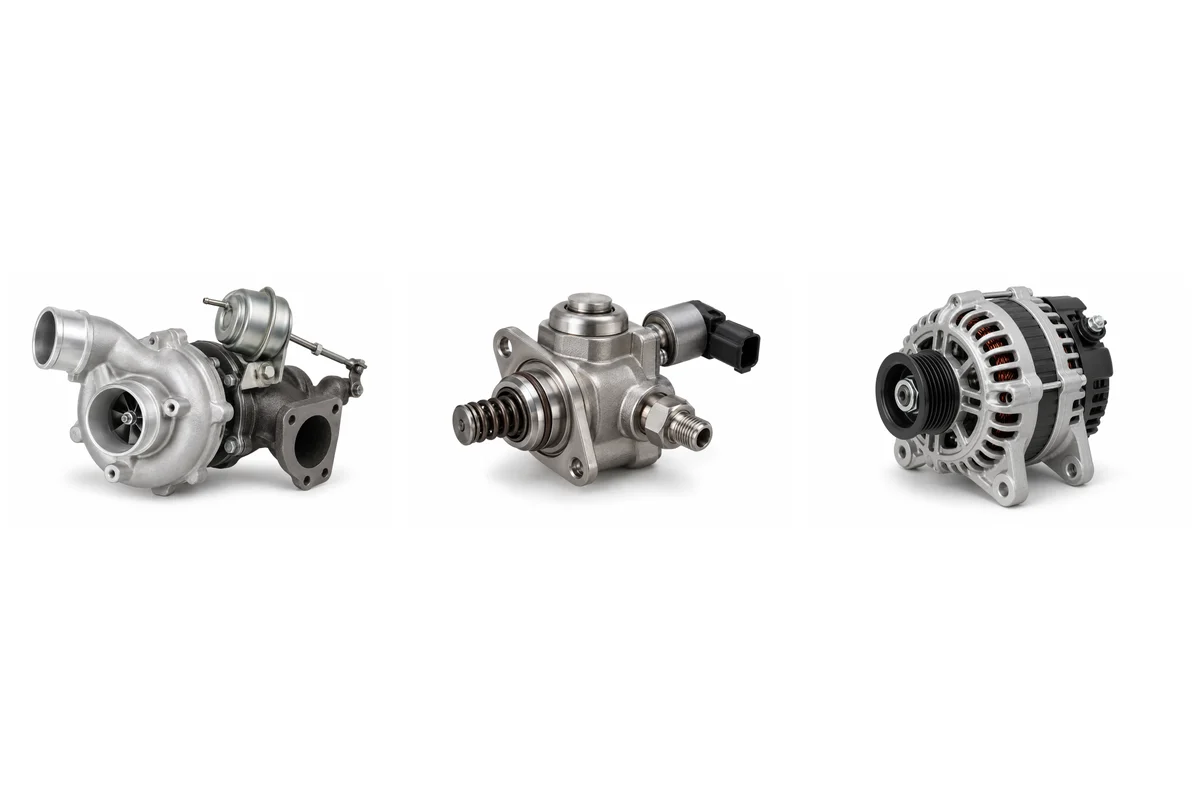
Group requests by function
A fault description can explain the buyer need, but it does not identify the replacement assembly. Record the installed label and connector before comparing options.
Distinguish intake sensing and control
Air-flow measurement, intake pressure and throttle control are different functions. Confirm whether a separate air-flow meter is actually installed. Pressure range and sensor location remain important on turbocharged engines even when the connector resembles another sensor.
Identify the Mass Air Flow Sensor and MAP Sensor by their separate measuring functions and engine-specific interfaces.
Identify the fuel-pressure stage
Keep tank delivery, engine high-pressure pumping and injection on separate lines. MPI petrol, GDI petrol and common-rail diesel require their own engine records. Injector markings and any calibration requirements should stay with the supplied units through quotation and packing.
Keep emissions and electrical claims narrow
A catalyst or diesel particulate filter must match its engine and destination-market requirements; a part number alone does not promise regulatory acceptance. Conventional alternator and starter inquiries need the installed charging architecture. Engine covers and sumps should be selected by their own sealing and mounting interfaces.
Components to identify separately
| Assembly | Selection evidence |
|---|---|
| Oxygen Sensor | Engine emission system, upstream or downstream location and plug |
| Mass Air Flow Sensor | Engine metering strategy, housing and sensor calibration |
| MAP Sensor | Intake or boost pressure location, pressure range and connector |
| Crankshaft Position Sensor | Engine block location, trigger system and mounting depth |
| Camshaft Position Sensor | Engine, intake or exhaust cam position and locating tab |
| Fuel Pump | Tank delivery module, fuel type, sender and outlet configuration |
| High Pressure Fuel Pump | GDI petrol versus common-rail diesel pump and drive interface |
| Fuel Injector | MPI, GDI or diesel injection, calibration and sealing arrangement |
| Throttle Body | Engine intake bore, actuator and coolant or vacuum connections |
| Vapor Canister Purge Valve | Petrol EVAP plumbing, valve direction and electrical connection |
| Turbocharger | Turbo engine, exhaust flange, actuator and oil or coolant ports |
| Intercooler | Turbo charge-air route, core dimensions and end-tank connections |
| EGR Valve | Engine emission package, cooler interface and actuator type |
| Diesel Particulate Filter | Diesel emissions variant, sensor bungs and exhaust layout |
| Catalytic Converter | Engine, emission market, catalyst position and oxygen-sensor ports |
| Vacuum Pump | Engine-driven or electric vacuum source and brake-assist requirement |
| Alternator | Conventional charging system, output, regulator and pulley |
| Starter Motor | Conventional or stop-start application, pinion and mounting flange |
| Engine Oil Pan | Engine, upper or lower sump, level-sensor opening and crossmember clearance |
| Valve Cover | Engine head, breather system, gasket and ignition openings |
Continue your parts list
Return to the Rio parts directory for other systems. The OE and VIN checklist covers missing identification, while the quotation guide covers commercial and freight information.
Auto parts inquiry
Send the vehicle and part evidence.
Include brand, full model, year, engine or EV drivetrain, OE/material code, quantity, destination and packing request. You can attach a list or old-part photos.