
Kia Sorento replacement parts
Kia Sorento Generations, Frames & Markets
A Sorento order should begin with its production record, original sales market and chassis family.
Generation and body boundaries
| Generation | Context | What changes |
|---|---|---|
| BL | First generation; frame-based longitudinal layout | Separate two-wheel drive from the installed selectable or automatic four-wheel-drive equipment. Record axle ratios, transfer controls and engine before ordering running gear. |
| XM | Second-generation crossover | Identify the transverse powertrain, FWD or AWD, steering equipment and regional body record. BL driveline assemblies are not a reference for this platform. |
| UM | Third-generation crossover | Keep production date, facelift, engine, transmission and installed parking brake together. Seating and trim labels alone do not identify brake or lighting equipment. |
| MQ4 | Fourth generation | Separate conventional petrol/diesel from HEV and PHEV applications. Record the actual electrical, cooling and transmission equipment and original sales market. |
| Regional production | Generation dates vary by market | Use the production plate and catalog vehicle record. A registration year or a familiar Sorento badge cannot establish interchangeability. |
Identify the chassis before the component
Keep the engine, transmission and driven-axle arrangement attached to the same vehicle record. A registration date is useful context, but cannot resolve a vehicle assembled for another market.
Separate the frame-based SUV from later crossovers
The first Sorento used a longitudinal, frame-based layout with different two-wheel-drive and four-wheel-drive arrangements. Later generations use a transverse crossover architecture. Do not transfer assumptions about axle housings, transfer units, suspension mounts or steering equipment between these layouts.
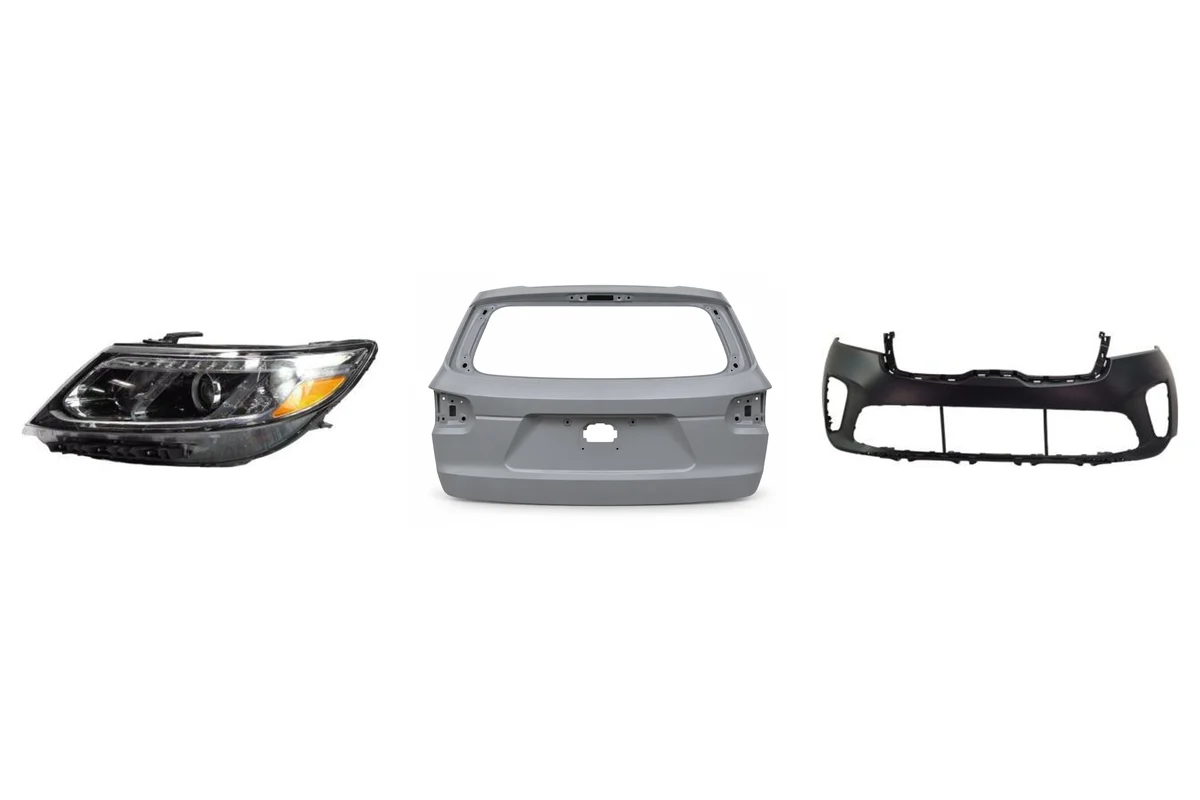
Match the Front Bumper and Headlights to the same regional front-end design before approving a collision-parts order.
Treat facelift and equipment as separate checks
For collision repairs, compare front and rear photographs with lamp contours, grille junctions and inner mounting points. A shared generation code does not identify beam direction, sensor openings or powered tailgate equipment. Keep body and electrical feature checks with each affected assembly.
Build a repeatable purchase record
Record the old part label, mounting views and distinguishing dimensions alongside the vehicle identification. Where a supplier proposes a superseding number, retain the original and proposed references for confirmation. Split order lines when chassis, engine or installed equipment changes rather than assuming a broad year range covers every vehicle.
Components to identify separately
| Assembly | Selection evidence |
|---|---|
| Headlights | Body generation, facelift, side, beam market and lamp technology |
| Front Bumper | Facelift, regional body, grille shape and sensor apertures |
| Rear Bumper | Body length, reflector positions, exhaust openings and sensors |
| Steering Rack | Rack-equipped generation, LHD or RHD and assist type |
| CV Axle | Side, transmission output, spline and shaft length |
| Transfer Case / Transfer Unit | Early selectable 4WD versus later transverse AWD transfer unit |
Continue your parts list
Return to the Sorento parts directory for other systems. The OE and VIN checklist covers missing identification, while the quotation guide covers commercial and freight information.
Auto parts inquiry
Send the vehicle and part evidence.
Include brand, full model, year, engine or EV drivetrain, OE/material code, quantity, destination and packing request. You can attach a list or old-part photos.