
Hyundai Tucson procurement guide
Hyundai Tucson Engine, Cooling, Fuel and A/C Parts Guide
Name each circuit before comparing ports, connectors, controls or heat exchangers.
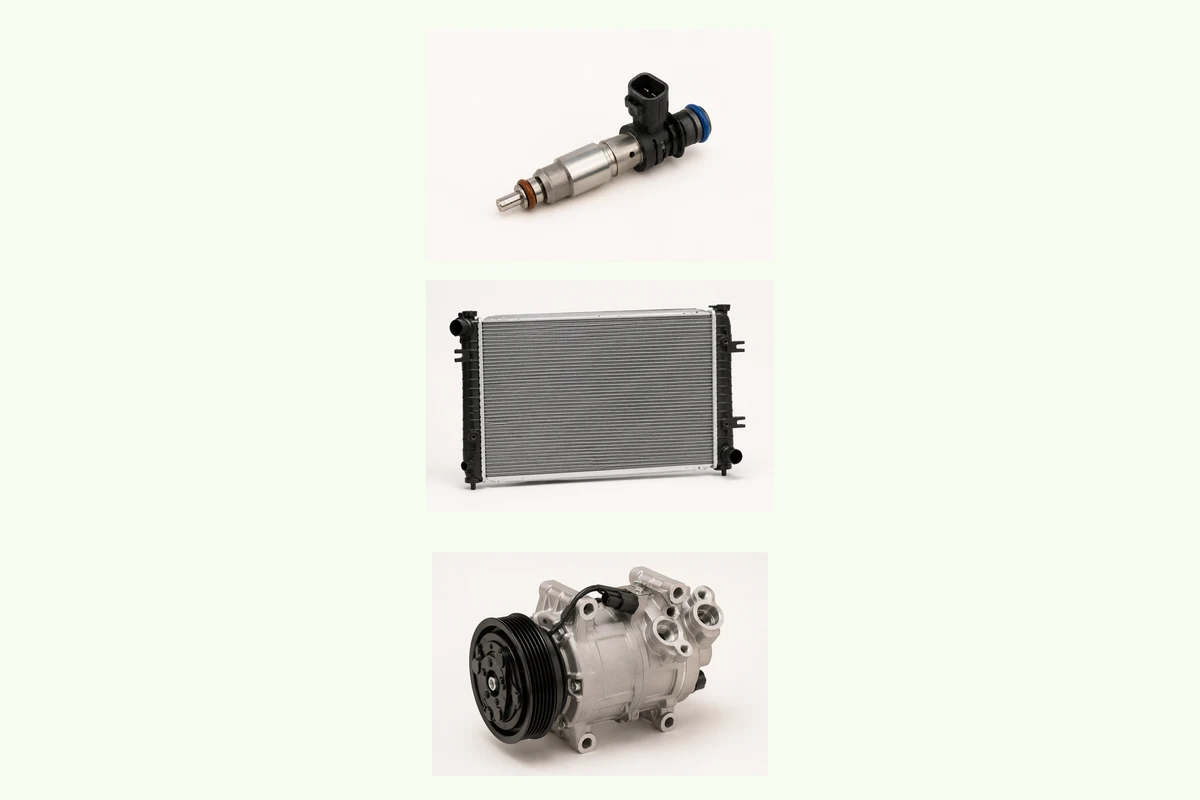
Keep pressure systems distinct
Port injection, gasoline direct injection and diesel common rail use different pumps, injectors, seals and pressure controls.
Separate heat exchangers
Radiator, condenser, intercooler, evaporator and oil cooler serve different circuits and require their own dimensions and ports.
Scope sensors and emissions parts by function
Upstream or downstream oxygen sensing, crank or cam position, airflow, manifold pressure, EGR and DPF equipment are not interchangeable labels.
Engine, Fuel, Cooling, Electrical & A/C
Separate petrol, diesel, hybrid and plug-in hybrid systems by exact generation, engine and market record.
| Component | Selection boundary |
|---|---|
Build a Tucson oxygen sensor inquiry around engine and emission market, then compare bank and upstream or downstream position and sensor type, connector and lead. | |
Match the Tucson mass air flow sensor to engine and air-cleaner housing. Record sensor-only or housing assembly together with connector and calibration family before sampling. | |
For Tucson map / boost pressure sensor, start with engine and intake pressure location; use mounting and pressure port and connector and measuring range to separate similar variants. | |
Specify Tucson crankshaft position sensor by engine and trigger arrangement. Retain mounting depth and flange and connector and lead route so offers describe the same assembly. | |
Build a Tucson camshaft position sensor inquiry around engine, bank and sensor position, then compare inserted length and flange and connector and original label. | |
Match the Tucson fuel pump / supply module to engine and in-tank module type. Record pump, sender and strainer contents together with outlet, connector and tank flange before sampling. | |
For Tucson high-pressure fuel pump, start with proven direct-injection petrol application; use cam drive and mounting flange and pressure ports and control connector to separate similar variants. | |
Specify Tucson fuel injector by port or direct-injection engine. Retain injector label and rail interface and nozzle, connector and seal set so offers describe the same assembly. | |
Build a Tucson throttle body inquiry around engine and control function, then compare bore, mounting and pipe layout and actuator and connector. | |
Match the Tucson turbocharger to confirmed turbocharged petrol or diesel engine. Record turbo label, flanges and ports together with wastegate actuator and manifold scope before sampling. | |
For Tucson intercooler / charge-air cooler, start with confirmed turbocharged charge-air system; use core dimensions and outlet direction and mounts, ducts and sensor openings to separate similar variants. | |
Specify Tucson egr valve by engine and emission-system revision. Retain valve, cooler and pipe relationship and connector and mounting interface so offers describe the same assembly. | |
Build a Tucson diesel particulate filter inquiry around confirmed diesel engine and emissions market, then compare canister label, sensor ports and pipe geometry and bare filter or catalyst and sensor contents. | |
Match the Tucson vacuum pump to engine and vacuum source. Record drive and lubrication interface together with mounting and vacuum outlet before sampling. | |
For Tucson vapor canister purge valve, start with engine and emission market; use valve location and hose ports and connector and flow direction to separate similar variants. | |
Specify Tucson water pump by engine and coolant circuit. Retain drive and impeller arrangement and housing and seal geometry so offers describe the same assembly. | |
Build a Tucson radiator inquiry around engine, transmission and cooling package, then compare core dimensions and hose positions and oil-cooler and mount interfaces. | |
Match the Tucson thermostat to engine and temperature specification. Record bypass and seal arrangement together with insert or housing supply before sampling. | |
For Tucson radiator cooling fan, start with cooling layout and fan position; use motor or mechanical drive and blade, shroud and controller contents to separate similar variants. | |
Specify Tucson alternator by engine and charging specification. Retain output, connector and regulation and pulley and mounting geometry so offers describe the same assembly. | |
Build a Tucson starter motor inquiry around engine, gearbox and voltage, then compare pinion and mounting flange and rotation and solenoid terminals. | |
Match the Tucson a/c compressor to refrigerant and compressor reference. Record drive, control and connector together with mounting and refrigerant ports before sampling. | |
For Tucson a/c condenser, start with front cooling package; use core, mounts and refrigerant fittings and receiver-drier inclusion to separate similar variants. | |
Specify Tucson a/c evaporator by front or rear hvac position. Retain core and pipe geometry and valve and sensor interfaces so offers describe the same assembly. | |
Build a Tucson blower motor inquiry around front or rear hvac and drive side, then compare wheel dimensions and rotation and connector and controller contents. | |
Match the Tucson timing chain kit to engine and timing architecture. Record chain, guide and tensioner references together with primary and secondary chains and sprockets included before sampling. | |
For Tucson oil cooler, start with engine or cvt fluid circuit; use coolant and oil port layout and core or housing assembly contents to separate similar variants. |
Continue with the same vehicle details
Use the Tucson parts directory to identify other assemblies. Once specifications are clear, retain quantities, packing and destination through the shipping and quotation guide.
Auto parts inquiry
Send the vehicle and part evidence.
Include brand, full model, year, engine or EV drivetrain, OE/material code, quantity, destination and packing request. You can attach a list or old-part photos.