
MG ZS SUVs • Petrol, EV and Hybrid+ identified separately
MG ZS Petrol Fuel, Turbo & Electrical Parts
Identify MG ZS petrol injection, tank delivery, turbo and conventional electrical parts. Keep engine sensors and Hybrid+ generating equipment separate.
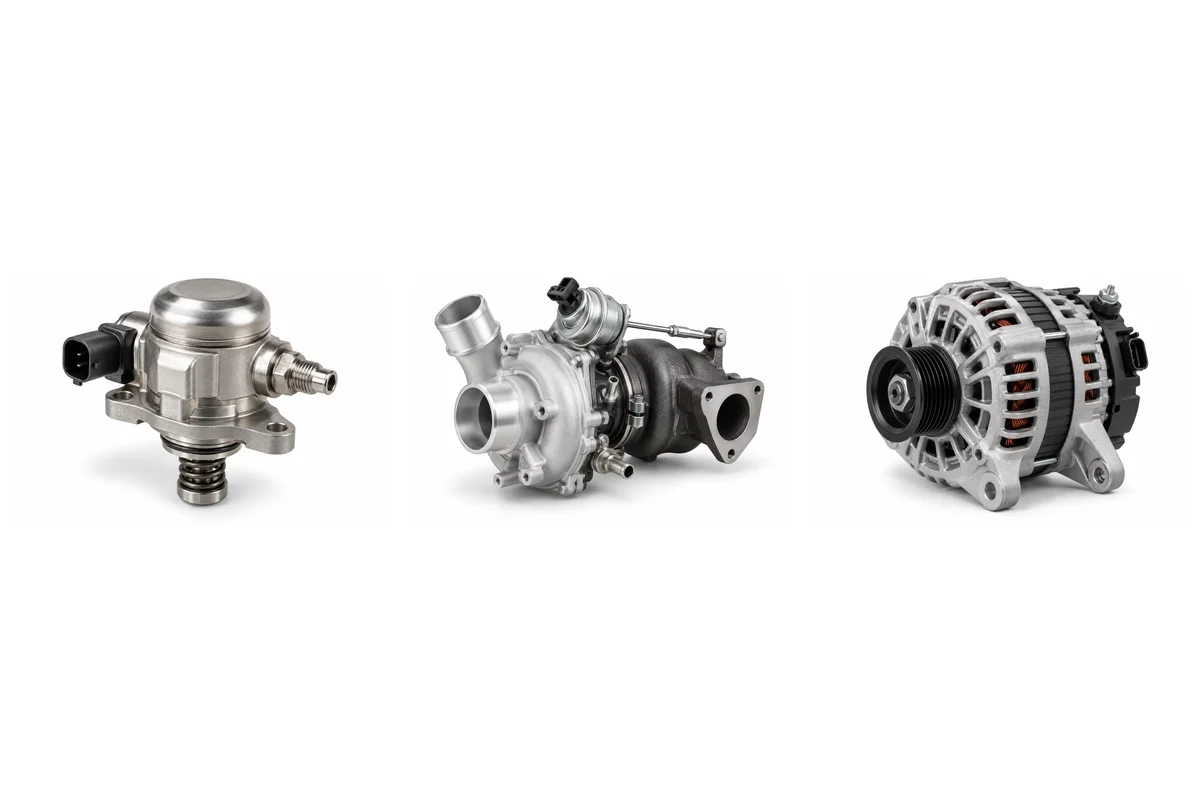
Identify the combustion engine first
Earlier naturally aspirated 1.5, turbo ZS/ZST and newer petrol engines require their actual engine and emission records. Hybrid+ retains its own combustion-engine equipment and dedicated electrical architecture. ZS EV does not inherit those fuel, ignition or exhaust orders from the common SUV badge.
Separate port injection from direct injection
Keep fuel-rail, injector and engine markings together. A turbo badge alone cannot identify a high-pressure pump. A separately verified direct-injection pump needs its drive and rail connections; a port-injection engine or an unverified hybrid request must not be assigned that pump by displacement.
Distinguish tank delivery and engine high pressure
The tank pump is selected by flange, outlet, sender and socket at the actual tank. The engine-mounted pressure stage has another boundary. A tank-module strainer and separately serviceable inline filter also have different contents, so identify them before building a mixed fuel-system line.
Keep turbo and charge-air records paired
Earlier 1.0T, ZST 1.3T and newer 1.5T installations retain their original turbo/actuator and fluid interfaces. Match a charge-air cooler to the fitted pipe route and front carrier. Naturally aspirated petrol, EV and non-turbo Hybrid+ equipment do not acquire a turbo from this comparison.
Preserve sensor and intake functions
Exhaust oxygen, intake pressure and crank/cam position devices need their system positions, sockets and complete markings. Intake manifolds, throttle bodies and valve covers also retain their engine-side ports and flange geometry. A shared engine-sensor category does not establish identical signals.
Restrict conventional generating and starting units
An installed petrol alternator needs output, regulator, pulley and bracket information; a pinion starter needs its engine/gearbox and flywheel interface. Dedicated Hybrid+ generating/starting hardware and EV conversion equipment are different requests. Do not approve those units from conventional petrol photographs.
Related assembly comparisons
Keep engine and exhaust position with the oxygen sensor, while the MAP / intake pressure sensor follows the actual intake-pressure function.
The crankshaft position sensor retains a different trigger and mounting record; these are not interchangeable engine-sensor names.
Identify the tank boundary of the fuel pump / tank module separately from an engine-mounted high-pressure fuel pump.
Match each fuel injector to the accepted rail and injection architecture rather than a turbo badge alone.
Retain bore and actuator identity on the throttle body against its intake manifold flange.
The MAP / intake pressure sensor is a separately identified measurement device; complete manifold contents must state whether sensors and actuators are included.
Assemblies to identify separately
| Assembly | Application boundary | Selection record |
|---|---|---|
| Oxygen Sensor | Identified petrol or Hybrid+ engine application; ZS EV excluded | Upstream/downstream role, full label, lead and socket |
| MAP / Intake Pressure Sensor | Identified petrol or Hybrid+ engine application; ZS EV excluded | Engine, pressure range, label, mounting and socket |
| Crankshaft Position Sensor | Identified petrol or Hybrid+ engine application; ZS EV excluded | Full label, depth, fixing and electrical interface |
| Camshaft Position Sensor | Identified petrol or Hybrid+ engine application; ZS EV excluded | Intake/exhaust position, label, depth and mounting |
| Fuel Pump / Tank Module | Identified petrol or Hybrid+ engine application; ZS EV excluded | Tank flange, socket, sender, outlet and module marking |
| High-Pressure Fuel Pump | Confirmed direct-injection petrol engine only; not port-injection tank delivery | Engine and pump label, mounting, drive and fuel unions |
| Fuel Injector | Identified petrol or Hybrid+ engine application; ZS EV excluded | Engine, full marking, socket, rail and nozzle interface |
| Throttle Body | Identified petrol or Hybrid+ engine application; ZS EV excluded | Bore, flange, actuator, socket and hose connections |
| Alternator | Confirmed conventional petrol charging unit only; BEV and Hybrid+ generating equipment excluded | Engine, output, bracket, pulley and control plug |
| Starter Motor | Identified conventional petrol pinion starter only; no assumed BEV or Hybrid+ application | Engine/gearbox, label, pinion, mounting and terminals |
| Turbocharger | Actual turbo petrol engine only; naturally aspirated petrol, BEV and Hybrid+ excluded | Engine, turbo label, fluid ports, actuator and flanges |
| Intercooler / Charge-Air Cooler | Confirmed turbo petrol charge-air circuit only | Core, air ports, hose joints and carrier mounting |
| Valve Cover | Identified petrol or Hybrid+ engine application; ZS EV excluded | Engine marking, cover perimeter, oil cap, breather and gasket seats |
| Intake Manifold | Identified petrol or Hybrid+ engine application; ZS EV excluded | Engine code, runner pattern, throttle flange, sensors and breather ports |
Continue the accepted list
Keep the full vehicle record with the ZS system directory. The parts-list quotation guide covers quantity, destination and commercial details without assuming price or stock.
Auto parts inquiry
Send the vehicle and part evidence.
Include brand, full model, year, engine or EV drivetrain, OE/material code, quantity, destination and packing request. You can attach a list or old-part photos.